



ลิ้งค์เชื่อมต่อ

ยาน 'Cassini - Huygens' ทำลายตัวเองหลังจบภารกิจสำรวจดาวเสาร์นานกว่า 20 ปี

This Aug. 12, 2009 composite image made available by NASA shows Saturn in equinox seen by the approaching Cassini spacecraft. Saturn's equinox occurs only once in about 15 Earth years.
1/15 This Aug. 12, 2009 composite image made available by NASA shows Saturn in equinox seen by the approaching Cassini spacecraft. Saturn's equinox occurs only once in about 15 Earth years.
This Jan. 28, 2016 image made available by NASA shows Saturn's rings, including the darker series of bands called the Cassini Division between the bright B ring, left, and dimmer A ring, right.
2/15 This Jan. 28, 2016 image made available by NASA shows Saturn's rings, including the darker series of bands called the Cassini Division between the bright B ring, left, and dimmer A ring, right.
This Dec. 3, 2015 image made available by NASA shows three of Saturn's moons - Tethys, above, Enceladus, second left, and Mimas, seen from the Cassini spacecraft.
3/15 This Dec. 3, 2015 image made available by NASA shows three of Saturn's moons - Tethys, above, Enceladus, second left, and Mimas, seen from the Cassini spacecraft.
This 2007 image made available by NASA shows a hydrocarbon sea named Ligeia Mare on Saturn's moon Titan, as seen by the Cassini spacecraft.
4/15 This 2007 image made available by NASA shows a hydrocarbon sea named Ligeia Mare on Saturn's moon Titan, as seen by the Cassini spacecraft.
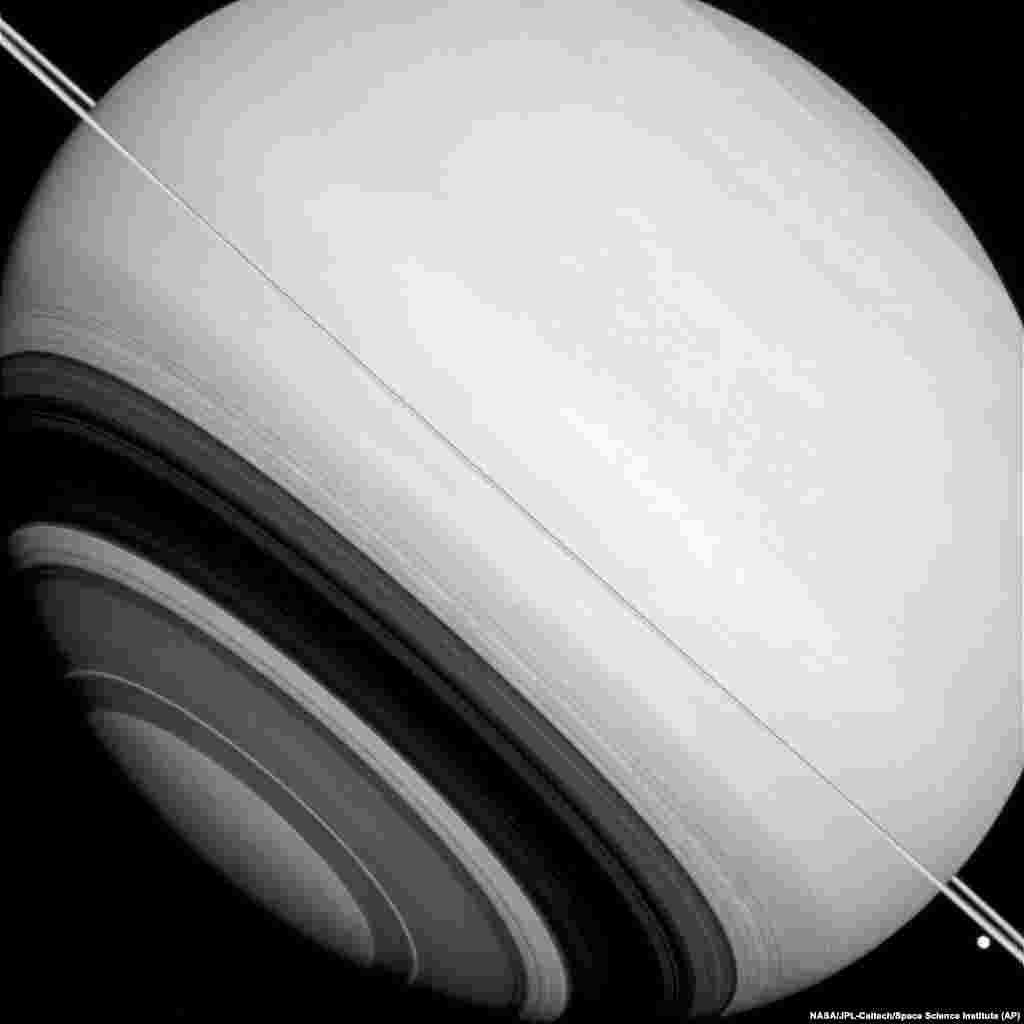
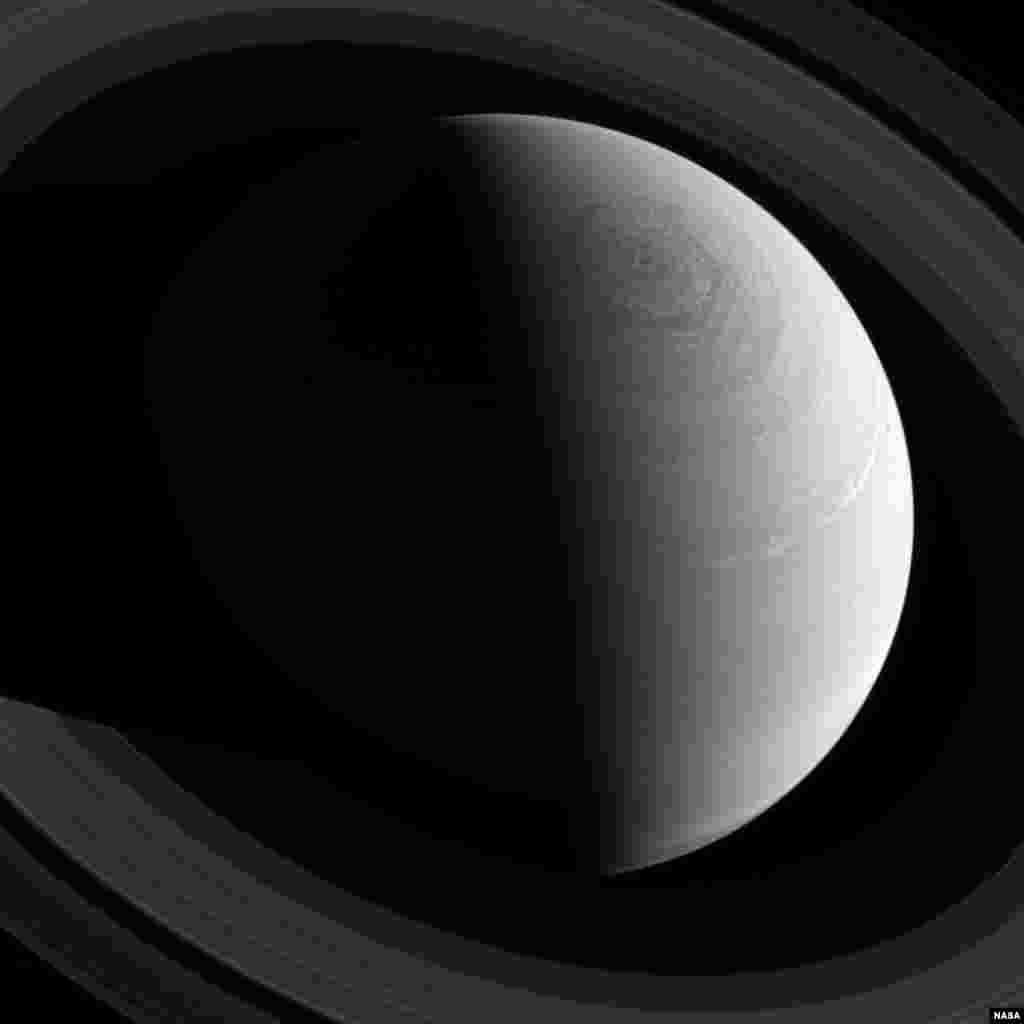
This Aug. 14, 2014 image made available by NASA shows shadows of Saturn's rings projected on the southern hemisphere of the gas giant.
5/15 This Aug. 14, 2014 image made available by NASA shows shadows of Saturn's rings projected on the southern hemisphere of the gas giant.
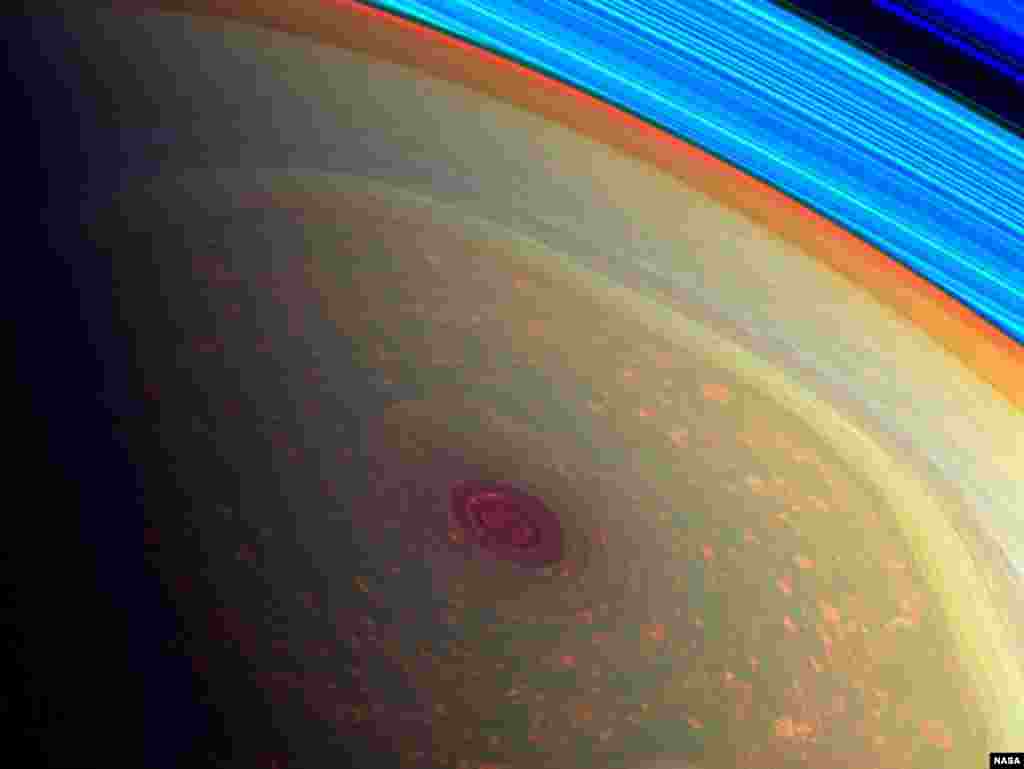
The Cassini spacecraft has captured the first detailed images of a giant hurricane on Saturn.
6/15 The Cassini spacecraft has captured the first detailed images of a giant hurricane on Saturn.
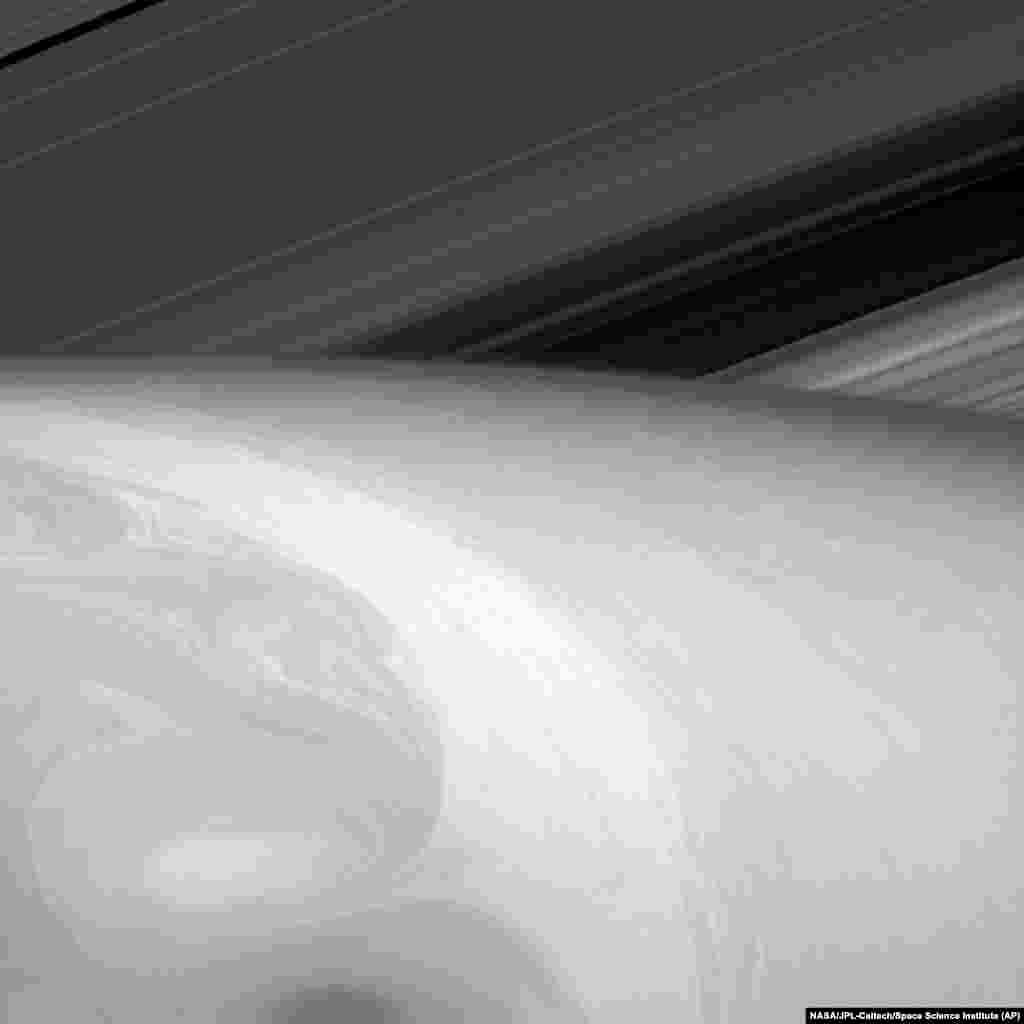
This Aug. 23, 2014 image made available by NASA shows the fluid dynamics in Saturn's uppermost cloud layers.
7/15 This Aug. 23, 2014 image made available by NASA shows the fluid dynamics in Saturn's uppermost cloud layers.
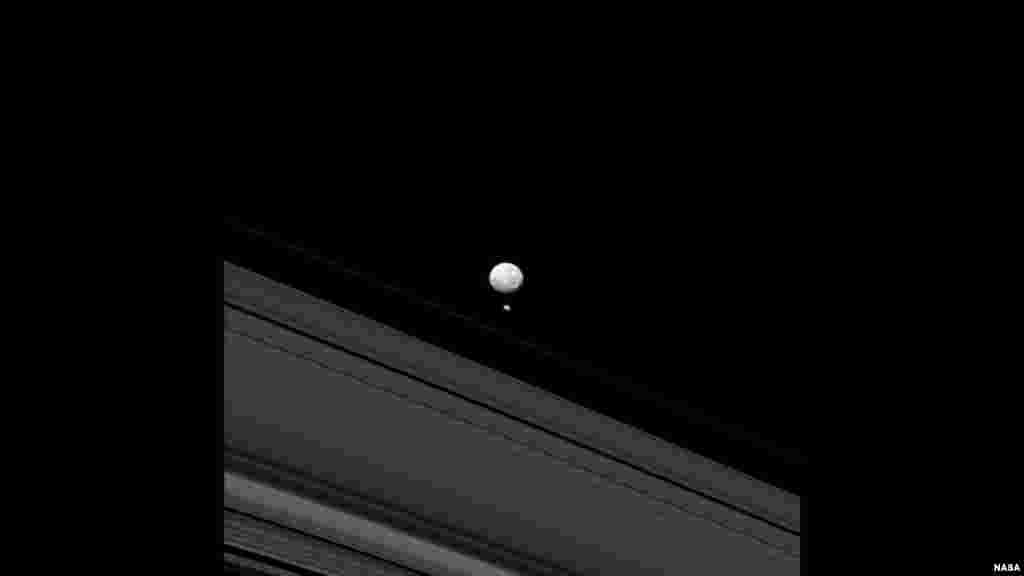
The Saturn moons Mimas and Pandora appear together in this image taken by NASA's Cassini spacecraft. Pandora's small size means that it lacks sufficient gravity to pull itself into a round shape like its larger sibling, Mimas. (NASA/JPL-Caltech/Space Science Institute)
8/15 The Saturn moons Mimas and Pandora appear together in this image taken by NASA's Cassini spacecraft. Pandora's small size means that it lacks sufficient gravity to pull itself into a round shape like its larger sibling, Mimas. (NASA/JPL-Caltech/Space Science Institute)
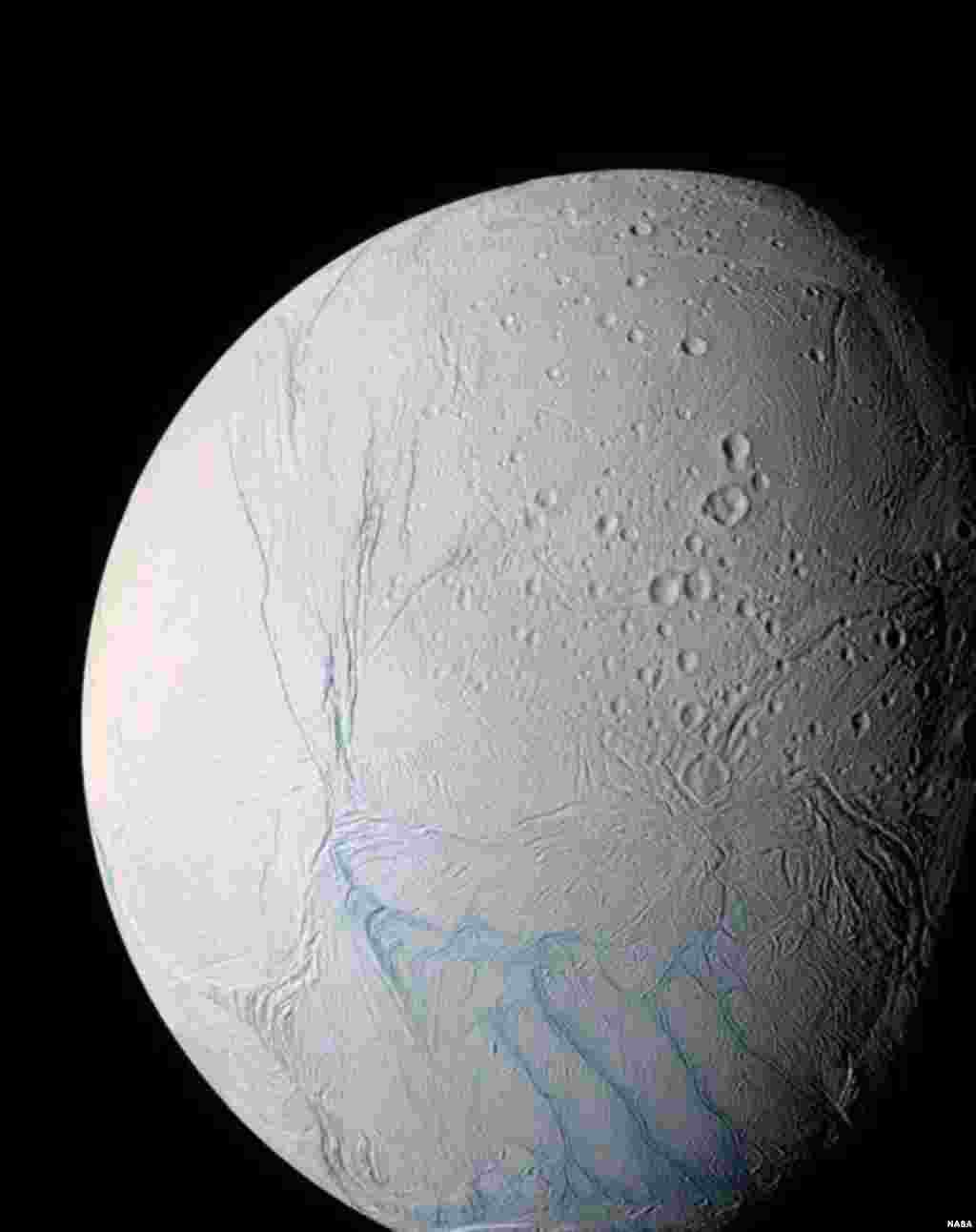
Enceladus, one of moons of Saturn, as seen by NASA's Cassini spacecraft. (NASA)
9/15 Enceladus, one of moons of Saturn, as seen by NASA's Cassini spacecraft. (NASA)
This image of Saturn taken with the Cassini spacecraft wide-angle camera on Nov. 23, 2013 and released on Feb. 3, 2014 was taken using a spectral filter that preferentially admits wavelengths of near-infrared light centered at 752 nanometers. (NASA/JPL-Cal Tech)
10/15 This image of Saturn taken with the Cassini spacecraft wide-angle camera on Nov. 23, 2013 and released on Feb. 3, 2014 was taken using a spectral filter that preferentially admits wavelengths of near-infrared light centered at 752 nanometers. (NASA/JPL-Cal Tech)
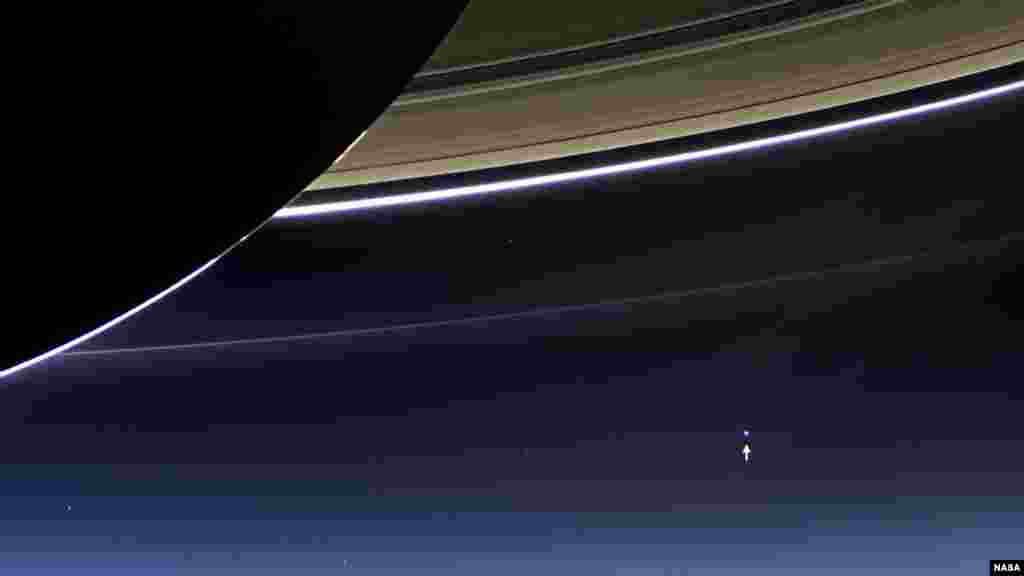
In this rare image taken on July 19, 2013, the wide-angle camera on NASA&#39;s Cassini spacecraft has captured Saturn&#39;s rings and our planet Earth and its moon in the same frame. (Credit: NASA/JPL-Caltech/Space Science Institute)<br />
<br />
&nbsp;
11/15 In this rare image taken on July 19, 2013, the wide-angle camera on NASA's Cassini spacecraft has captured Saturn's rings and our planet Earth and its moon in the same frame. (Credit: NASA/JPL-Caltech/Space Science Institute)

 
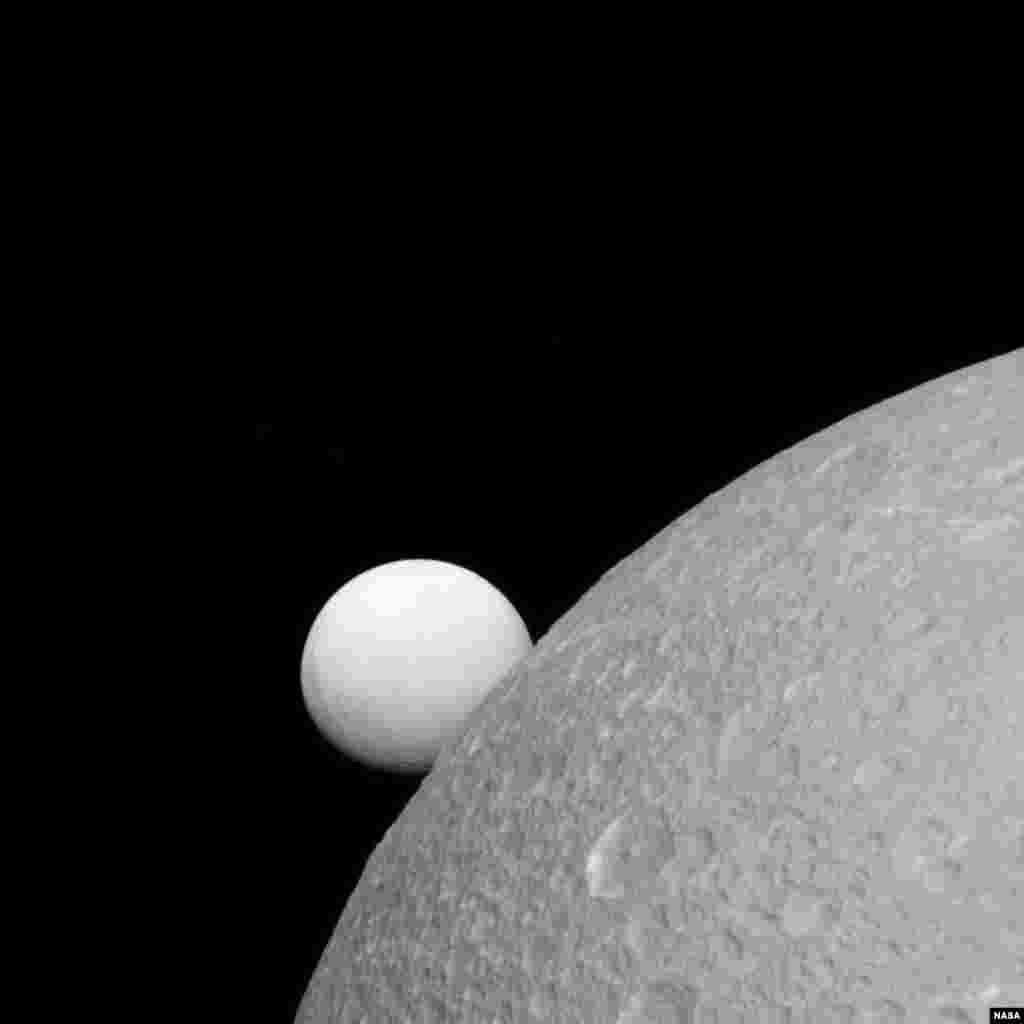
Dione with Enceladus in the background. This image was taken by the Cassini spacecraft, Sept. 8, 2015.
12/15 Dione with Enceladus in the background. This image was taken by the Cassini spacecraft, Sept. 8, 2015.
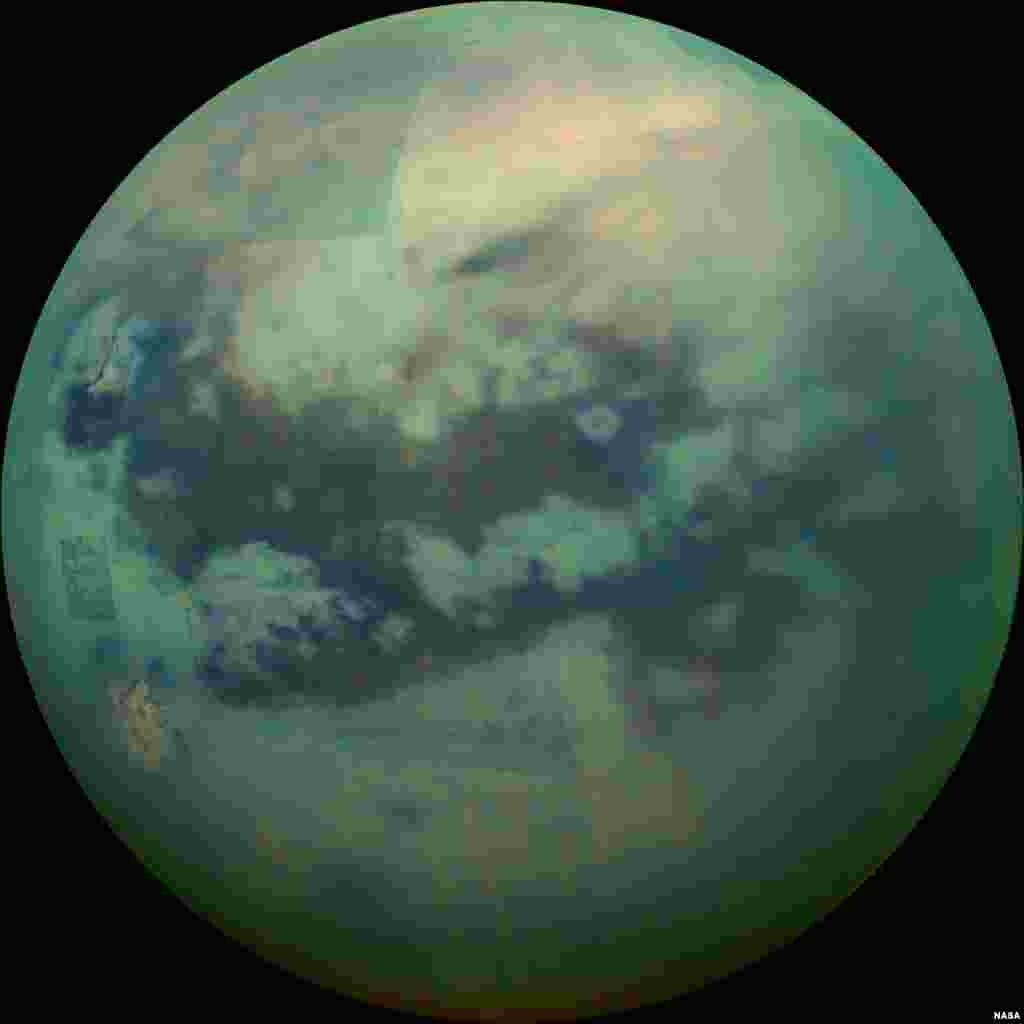
This Nov. 13, 2015 composite image made available by NASA shows an infrared view of Saturn&#39;s moon, Titan, as seen by the Cassini spacecraft. The near-infrared wavelengths in this image allow the cameras to penetrate the haze and reveal the moon&#39;s surface.
13/15 This Nov. 13, 2015 composite image made available by NASA shows an infrared view of Saturn's moon, Titan, as seen by the Cassini spacecraft. The near-infrared wavelengths in this image allow the cameras to penetrate the haze and reveal the moon's surface.
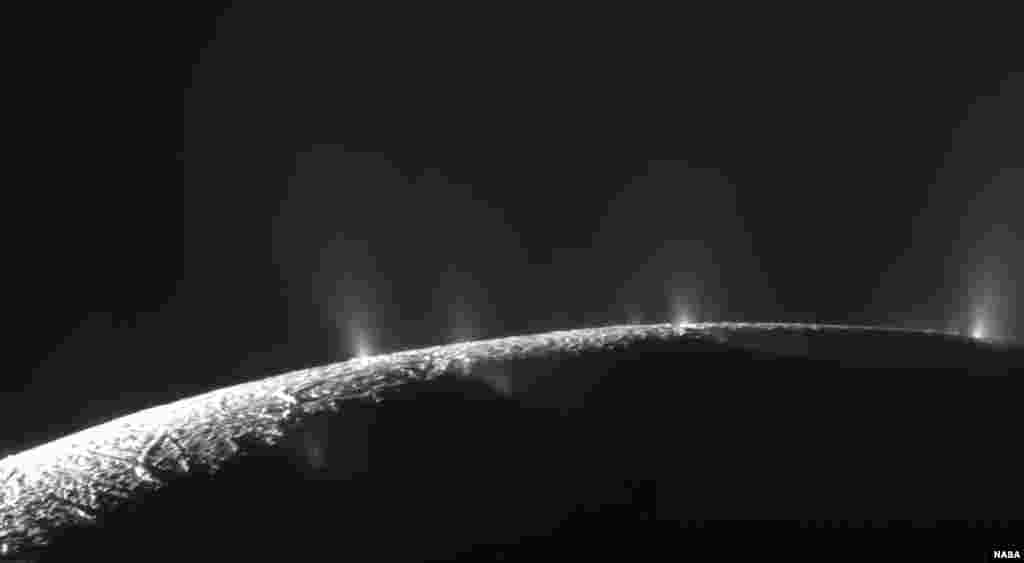
This Feb. 17, 2005 image made available by NASA shows plumes of water ice and vapor from the south polar region of Saturn&#39;s moon Enceladus. The activity is understood to originate from the moon&#39;s subsurface ocean of salty liquid water, which is venting into space.
14/15 This Feb. 17, 2005 image made available by NASA shows plumes of water ice and vapor from the south polar region of Saturn's moon Enceladus. The activity is understood to originate from the moon's subsurface ocean of salty liquid water, which is venting into space.
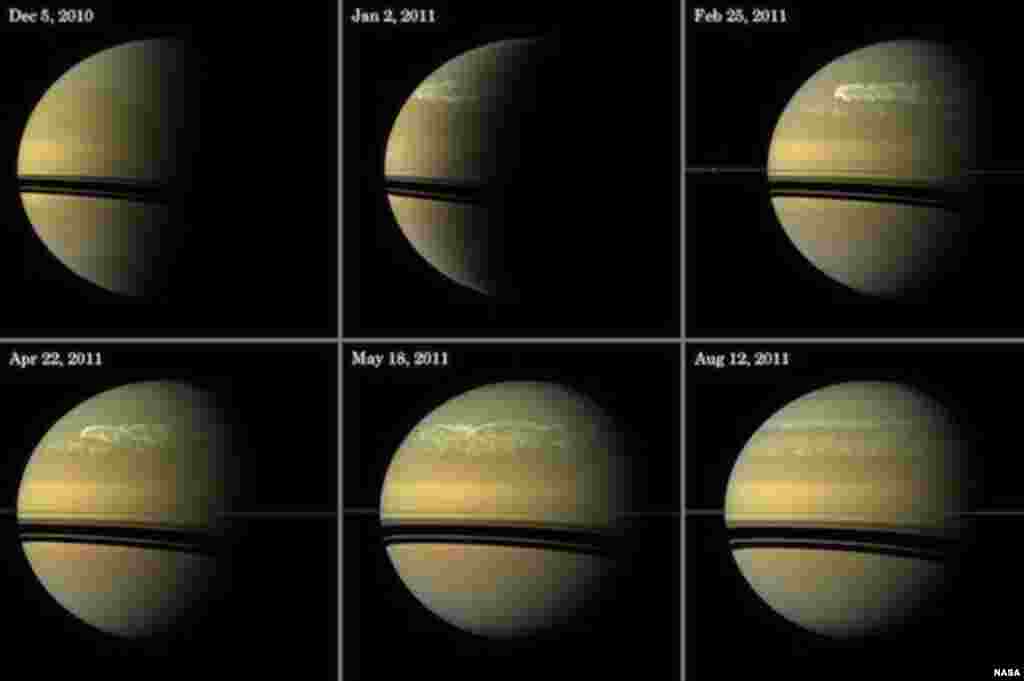
This series of images from NASA&rsquo;s Cassini spacecraft shows the development of the largest storm seen on the planet since 1990. These true-color and composite near-true-color views chronicle the storm from its start in late 2010 through mid-2011, showing how the distinct head of the storm quickly grew large but eventually became engulfed by the storm&rsquo;s tail.
15/15 This series of images from NASA’s Cassini spacecraft shows the development of the largest storm seen on the planet since 1990. These true-color and composite near-true-color views chronicle the storm from its start in late 2010 through mid-2011, showing how the distinct head of the storm quickly grew large but eventually became engulfed by the storm’s tail.
Previous slide
Next slide
please wait

No media source currently available

0:00 0:04:12 0:00

บรรดานักวิทยาศาสตร์และวิศวกรที่ห้องปฏิบัติการจรวดขับดันของนาซ่าหรือ JPL ในแคลิฟอร์เนีย ได้รับการยืนยันว่ายานสำรวจอวกาศ Cassini ได้พบจุดจบเเล้วตามที่คาดเอาไว้ เมื่อเช้าวันศุกร์ เมื่อเวลา 7 นาฬิกา 55 นาทีตามเวลาท้องถิ่นของกรุงวอชิงตัน หลังจากที่สัญญาณวิทยุจากยานสำรวจอวกาศ Cassini ได้สิ้นสุดลง

ย้อนไปเมื่อปี ค.ศ.1997 ในตอนนั้น ที่ห้องปฏิบัติ JPL ของนาซ่า ทีมนักวิศวกรทำการทดสอบครั้งสุดท้ายกับยานสำรวจอวกาศลำนี้ ที่สร้างขึ้นเพื่อเตรียมออกเดินทางไปสำรวจอวกาศในระยะทางมากกว่าหนึ่งพันล้านกิโลเมตร

ยานอวกาศลำนี้มีสองส่วน คือยานเเม่ที่โคจรรอบดาวเสาร์ และยานลูกที่จะต้องลงจอดบน Titan ดวงจันทร์ของดาวเสาร์

ในช่วงการเดินทางนาน 7 ปี เพื่อไปยังดาวเคราะห์ดวงที่ 6 และมีหลายครั้งที่ยานสำรวจลำนี้ได้ทำการบินผ่านดาวเคราะห์ดวงต่างๆ รวมทั้งการบินผ่านดาวพฤหัสบดี เเละบันทึกภาพสีที่มีรายละเอียดมากที่สุดของดาวเคราะห์ดวงนี้
ยาน Cassini-Huygens จบภาระกิจหลังสำรวจดาวเสาร์มานานกว่า 20 ปี
please wait

No media source currently available

0:00 0:02:40 0:00

ในเดือนกรกฎาคม ปี 2014 ยานสำรวจลำนี้ได้เดินทางไปเข้าสู่วงโคจรรอบดาวเสาร์ เเละในเดือนธันวาคม ยานสำรวจลูก Huygens ได้เเยกออกจากยานเเม่เเละลงจอดบน Titan ซึ่งเป็นการลงจอดบนดวงดาวครั้งเเรกในขอบของระบบสุริยะจักรวาล

Carolyn Porco หัวหน้าทีมงานด้านภาพถ่ายดาวเทียม กล่าวว่า ไม่มีคำบรรยายความรู้สึกของทีมงาน หลังจากยานออยเก้นส์ลงจอดบนดวงจันทร์ของดาวเสาร์ได้สำเร็จ เป็นประสบการณ์ที่เหลือเชื่อ น่าตื่นเต้นจนสาธยายไม่ถูก
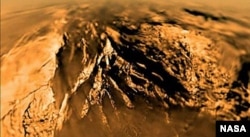
Titan is seen from the Huygens probe as it descended to the surface in 2005.

หลังจากยานลูกลงจอดบนดวงจันทร์ของดาวเสาร์เเล้ว ยานสำรวจอวกาศ Cassini ซึ่งเป็นยานเเม่ยังโคจรรอบดาวเสาร์ต่อไป เพื่อสำรวจดวงจันทร์อีกหลายดวงของดาวเสาร์ และส่งภาพถ่ายของวงเเหวนเเก๊สของดาวเสาร์ที่น่าทึ่งมากมายกลับมายังโลก

การค้นพบอย่างหนึ่งที่สร้างความตกตะลึงเเก่ทีมนักวิทยาศาสตร์ คือการค้นพบไอน้ำพวยพุ่งออกจากขั้วด้านใต้ของ Enceladus ดวงจันทร์อีกดวงหนึ่งของดาวเสาร์ที่ตั้งอยู่ในวงเเหวนเเก๊ส ซึ่งเเสดงให้เห็นว่าอาจมีทะเลขนาดใหญ่อยู่ภายใน
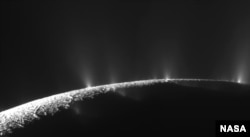
Numerous plumes are seen rising from long tiger-stripe canyons across Enceladus' craggy surface. Continued study of the ice plumes may yield further clues as to whether underground oceans, candidates for containing life, exist on this distant ice world.

​Morgan Cable วิศวกรในโครงการยานสำรวจอวกาศ Cassini กล่าวว่า ในตอนที่ออกแบบยานสำรวจนี้ ไม่เคยคิดฝันกันมาก่อนว่าอาจจะมีมหาสุมทรในบริเวณขอบของระบบสุริยจักรวาล

การค้นพบน้ำบนดวงจันทร์บางดวงของดาวเสาร์ อาจหมายถึงการค้นพบสิ่งมีชีวิตนอกโลก

Molly Bittner วิศวกรในโครงการยานสำรวจอวกาศ Cassini กล่าวว่า ดวงจันทร์ดวงนี้มีน้ำทะเลที่อยู่ในรูปของเหลวอยู่ภายใน เเละพวยพุ่งออกมาจากรอยเเยก

การค้นพบนี้ช่วยให้ทีมงานในโครงการตัดสินใจว่า ต้องทำลายยานทิ้งเมื่อยานไม่มีเชื้อเพลิงเหลือเเล้ว เพราะทีมงานไม่ต้องการให้จุลชีวะซึ่งเป็นสิ่งมีชีวิตเซลล์เดียวจากโลกที่อาจติดไปกับยานสำรวจอวกาศ เข้าไปปนเปื้อนดวงจันทร์ของดาวเสาร์ที่อาจมีสิ่งมีชีวิตอยู่
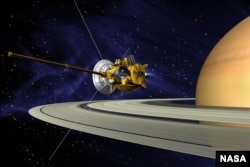
An artists concept of Cassini during the Saturn Orbit Insertion maneuver, just after the main engine has begun firing.

Cable กล่าวว่า ยังต้องการค้นหาสิ่งชีวิตบนดวงจันทร์ของดาวเสาร์ต่อไปในโครงการสำรวจในอนาคต แต่ไม่ต้องการนำสิ่งมีชีวิิตจากโลกที่ติดไปกับยานสำรวจอวกาศ Cassini ไปปนเปื้อนเเก่ดวงจันทร์เหล่านี้เสียเอง

Carolyn Porco กล่าวว่า เกิดคำถามที่สร้างความตื่นเต้นแก่วงการสำรวจอวกาศเป็นอย่างมาก ว่ามีสิ่งมีชีวิตในทะเลบนดวงจันทร์ Enceladus ซึ่งเป็นดวงจันทร์ของดาวเสาร์หรือไม่ ซึ่งนี่เป็นคำถามที่โครงการสำรวจระบบสุริยจักรวาลในอนาคตต้องค้นหาคำตอบกันต่อไป

Project manager Earl Maize, center left, and flight director Julie Webster hug in mission control at NASA's Jet Propulsion Laboratory, Sept. 15, 2017, in Pasadena, Calif., after confirmation of Cassini's demise.

แต่ก่อนที่จะถูกทำลายเป็นชิ้นๆ ในชั้นบรรยากาศของดาวเสาร์ ยานสำรวจอวกาศยานเเม่ Cassini ได้ส่งภาพระยะใกล้ภาพสุดท้ายของดาวเคราะห์แก๊สยักษ์ดวงนี้่กลับมายังโลกอีกด้วย เเละนักวิทยาศาสตร์จะต้องใช้เวลาอีกหลายปีเพื่อศึกษาและวิเคราะห์ข้อมูลต่างที่ได้ในวินาทีสุดท้ายก่อนที่ยานสำรวจอวกาศลำนี้จะพบจุดจบ

(เรียบเรียงโดยทักษิณา ข่ายแก้ว วีโอเอภาคภาษาไทยกรุงวอชิงตัน)

XS
SM
MD
LG